 Dubai, United Arab Emirates

When your O General AC is not cooling properly, indoor temperatures can quickly become uncomfortable, especially during the hot summer months in the UAE. You may notice weak airflow, warm air coming from the vents, water dripping from the indoor unit or a room that never reaches the selected temperature.
These symptoms can have several causes. Some relate to remote control settings or restricted airflow, while others may indicate a problem that requires inspection by a qualified air-conditioning technician.
This guide explains common O General AC cooling problems, the basic checks you can perform safely and when professional diagnosis is necessary.
Why Is Your O General AC Not Cooling?
An O General air conditioner may struggle to cool a room because of incorrect settings, dirty filters, blocked airflow, unsuitable capacity, high heat loads or a technical fault.
Before assuming the unit is defective, check its operating mode and the condition of the room. If the problem continues after basic checks, avoid repeatedly restarting the unit or attempting repairs without the appropriate qualifications.
1. Check the AC Remote Control Settings
One of the simplest things to check is whether the air conditioner is set to the correct mode.
If the unit is in Fan mode, it may circulate air without providing normal compressor-based cooling. Dry mode may also behave differently from Cool mode.
What to do:
Select Cool mode if active cooling is required.
Choose a comfortable target temperature below the current room temperature.
Confirm that the unit responds to the remote.
Check whether a timer or other setting is affecting operation.
The exact buttons and symbols depend on the remote supplied with your model. Consult its operating manual if you are unsure which settings are active.
2. Dirty or Blocked Air Filters
Air filters collect airborne dust and particles over time. If a filter becomes heavily clogged, airflow may be restricted and cooling performance can suffer.
Signs to look for:
Weaker airflow than usual.
Longer cooling times.
Dust accumulating around the air outlet.
Reduced comfort despite normal operation.
What to do: If your model has user-accessible filters, follow the manufacturer’s instructions for inspecting and cleaning them. Switch the unit off as directed before performing routine filter care, and allow filters to dry completely before reinstalling them.
If airflow remains weak after cleaning, another issue may be present. Do not open sealed or electrical components yourself.
3. Blocked Indoor or Outdoor Airflow
An air conditioner needs adequate airflow to transfer heat effectively. Obstructions around the indoor air outlet or outdoor unit can interfere with normal operation.
Check for furniture, curtains or other objects blocking the indoor outlet. From a safe position, look for obvious obstructions around the outdoor unit, such as accumulated debris.
Do not climb onto roofs, remove protective panels or reach into the outdoor unit while inspecting it. If access is unsafe or an obstruction cannot be cleared safely, arrange a qualified inspection.
4. The Room Is Too Hot for the AC’s Capacity
Sometimes an air conditioner is operating normally but cannot keep up with the room’s cooling demand.
This can happen when:
The room is larger than the unit can adequately cool.
Direct sunlight enters through large windows.
Several people or heat-producing appliances occupy the space.
The ceiling is high or insulation is inadequate.
Doors and windows allow hot outdoor air to enter.
During extreme UAE summer conditions, these factors can make cooling more difficult.
What to do: Close doors and windows while cooling, use curtains or shading to reduce direct sunlight, and check whether the AC’s capacity is suitable for the room. A cooling-load assessment can help determine whether the unit is appropriately sized.
5. The AC Is Blowing Warm Air
If your O General AC blows warm air while Cool mode is selected, the cause may involve settings, airflow, the outdoor unit or a technical problem.
Start by confirming the selected mode and target temperature. Check whether the indoor airflow is normal and whether the unit displays an error indication.
If the air remains warm, stop troubleshooting beyond these basic checks and arrange an assessment by a qualified technician. Refrigerant problems, compressor faults and electrical issues require appropriate diagnostic equipment and expertise.
Do not attempt to add refrigerant yourself. The correct refrigerant type, charge and diagnosis must follow the manufacturer’s specifications.
6. Low Refrigerant or a Refrigerant Leak
Refrigerant is essential to the cooling process. A leak or an incorrect refrigerant charge can reduce performance, but weak cooling alone does not prove that refrigerant is the problem.
Other faults can produce similar symptoms, so the cause needs to be diagnosed rather than assumed.
Possible warning signs include persistent poor cooling, unusual ice formation or recurring performance problems. These signs are not conclusive on their own.
What to do: Contact a qualified air-conditioning technician to inspect the system, identify any leak and determine the appropriate repair. Avoid releasing refrigerant or opening the sealed refrigeration circuit yourself.
7. Ice on the Indoor Unit or Refrigerant Pipes
Ice formation may indicate restricted airflow, an operating problem or another fault affecting the refrigeration system.
If you notice ice:
Stop cooling operation and follow the manufacturer’s instructions.
Do not chip or scrape ice from the unit or pipes.
Allow the system to defrost safely as directed by the manual.
Check user-accessible filters only when safe to do so.
Arrange a qualified inspection if icing returns or cooling remains poor.
Repeated icing should not be ignored. Continuing to operate a unit with a suspected fault may worsen the problem.
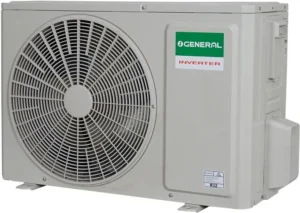
8. The Outdoor Unit Is Not Operating Normally
A split AC relies on both indoor and outdoor components to cool effectively. If the outdoor unit is not operating as expected, the indoor unit may provide little or no cooling.
Possible causes include an electrical supply issue, a control fault, a protective shutdown or a component problem.
Some inverter systems vary outdoor-unit operation according to demand, so a fan that is not continuously running does not automatically mean the system is faulty.
Check for visible error indicators and follow the manual’s instructions. Do not remove electrical covers, touch wiring or attempt to repair the compressor or control board. A qualified technician should diagnose persistent abnormal operation.
9. The AC Is Leaking Water and Cooling Poorly
Water dripping from an indoor unit can indicate a drainage problem or another condition affecting the system.
A blocked drain, ice formation or improper drainage can cause water to appear around the unit. If water is close to electrical equipment, keep clear and switch off the system only if it is safe to do so.
Do not dismantle the unit to access internal drains or electrical parts. Arrange an inspection if the leak continues, icing is present or cooling performance has declined.
10. An Error Code Appears on the Display
Some O General AC models display error codes or indicator patterns when the system detects an abnormal condition.
The meaning of an error code depends on the exact model and its control system. Do not assume a code has the same meaning across every O General product.
Record the displayed code or indicator pattern and consult the model’s official operating or service documentation. If the manual recommends professional inspection, follow that guidance rather than attempting an unverified reset or repair.
Providing the exact model number and error code to a qualified technician can help narrow down the issue.
Basic Troubleshooting Checklist
Before arranging an inspection, you can safely review these basic points:
Confirm that the AC is set to Cool mode.
Check that the target temperature is appropriate.
Make sure doors and windows are closed while cooling.
Inspect user-accessible filters according to the manual.
Check for obvious obstructions around air outlets.
Look for error codes or unusual indicator lights.
Note any unusual sounds, water leaks or ice formation.
Record the model number and when the problem began.
If the AC continues to blow warm air, repeatedly shuts down, leaks water or shows an unresolved error, stop basic troubleshooting and seek qualified assistance.
Never open electrical compartments, handle refrigerant, bypass safety devices or work on an outdoor unit in an unsafe location.
How to Prevent O General AC Cooling Problems
Routine care can help maintain airflow and make it easier to identify problems early. It cannot prevent every mechanical or electrical fault, but sensible operating practices can reduce avoidable issues.
Keep filters clean
Inspect and clean user-accessible filters according to the manufacturer’s instructions and the conditions in your home or business.
Maintain clear airflow
Keep indoor air outlets unobstructed and avoid placing objects where they restrict circulation.
Reduce unnecessary heat gain
Use shading where appropriate and keep doors and windows closed while the AC is running.
Choose the right capacity
An AC that is unsuitable for the room’s cooling load may struggle during periods of high heat. Consider room size, ceiling height, sunlight, insulation and occupancy when selecting a replacement.
Follow the manufacturer’s instructions
Use the correct operating settings and follow the recommended care and inspection guidance for your exact model.
Investigate recurring symptoms
If cooling performance deteriorates repeatedly, do not rely on repeated restarts or thermostat changes. A qualified diagnosis can help identify the underlying cause.
When Should You Replace an O General AC?
Not every cooling problem means the unit needs replacement. Incorrect settings, restricted airflow or a repairable fault may explain the issue.
Before deciding to replace an AC, consider:
The age and overall condition of the unit.
The nature and recurrence of the fault.
The cost and availability of the required repair.
Whether the existing capacity suits the space.
The efficiency and specifications of potential replacement models.
The applicable warranty terms.
A qualified assessment can help distinguish a repairable issue from a situation where replacement may be more appropriate.
If you are considering a replacement, explore the O General AC homepage to review available product options and compare their specifications.
Frequently Asked Questions
Why is my O General AC running but not cooling?
Possible causes include incorrect settings, restricted airflow, high room heat loads or a technical fault. Start with basic checks, such as confirming Cool mode and inspecting user-accessible filters. If the problem persists, arrange a qualified inspection.
Why is my O General AC blowing warm air?
Check that the unit is in Cool mode and that the selected temperature is appropriate. If the air remains warm, the problem may involve airflow, the outdoor unit or another technical issue that requires diagnosis.
Can a dirty filter cause an O General AC to stop cooling properly?
Yes. A heavily clogged filter can restrict airflow and reduce cooling performance. Clean accessible filters according to the manufacturer’s instructions.
Does low refrigerant cause poor cooling?
An incorrect refrigerant charge or leak can reduce cooling performance, but poor cooling alone does not confirm a refrigerant problem. A qualified technician should diagnose the system before any refrigerant work is carried out.
Why does my O General AC keep forming ice?
Ice can result from restricted airflow or other operating faults. Stop cooling operation as directed by the manual, allow safe defrosting and seek a qualified inspection if the problem returns.
Should I keep running my AC if it is not cooling?
If basic settings do not resolve the problem, or if you notice ice, water leakage, burning smells, unusual noises or electrical warning signs, stop using the unit when safe and seek qualified assistance. Follow the manufacturer’s safety instructions.
Where can I find O General AC models in UAE?
Visit the O General AC homepage to explore available options. Before purchasing a replacement, confirm the model’s capacity, specifications and warranty terms.
Conclusion
When your O General AC is not cooling, begin with simple checks involving the remote settings, filters and airflow. If the problem continues, the cause may require professional diagnosis rather than further adjustments.
Avoid assuming that every cooling problem is caused by low refrigerant or a defective compressor. A proper diagnosis can help identify the actual fault and determine the appropriate next step.
If you need to compare replacement options, visit the O General AC homepage and review the available models before making a buying decision.